
At a glance
The Castle at a glance
Map
Find it on the map
Honest gut-check
Is this stop worth your time?
The Castle is Capitol Reef's entry landmark — you'll see it regardless. Here's what to understand about it and why it matters.
Go for it if…
You're arriving at Capitol Reef for the first time
The Castle is the first major formation you see driving in on UT-24 — it's visible from the visitor center parking lot. It's also the clearest introduction to what the park looks like: massive cream and red sandstone walls rising straight off the desert.
You want to understand the Waterpocket Fold
The Castle is part of the reef — the nearly vertical layer of rock that runs 100 miles through the park. Looking at it from the visitor center, you can see the tilted and uplifted layers of sedimentary rock that give Capitol Reef its defining geological character.
You have limited mobility or limited time
The best views require nothing more than parking. The formation is fully visible from the visitor center and roadside pullouts on UT-24.
You want to photograph the park's entrance landmark
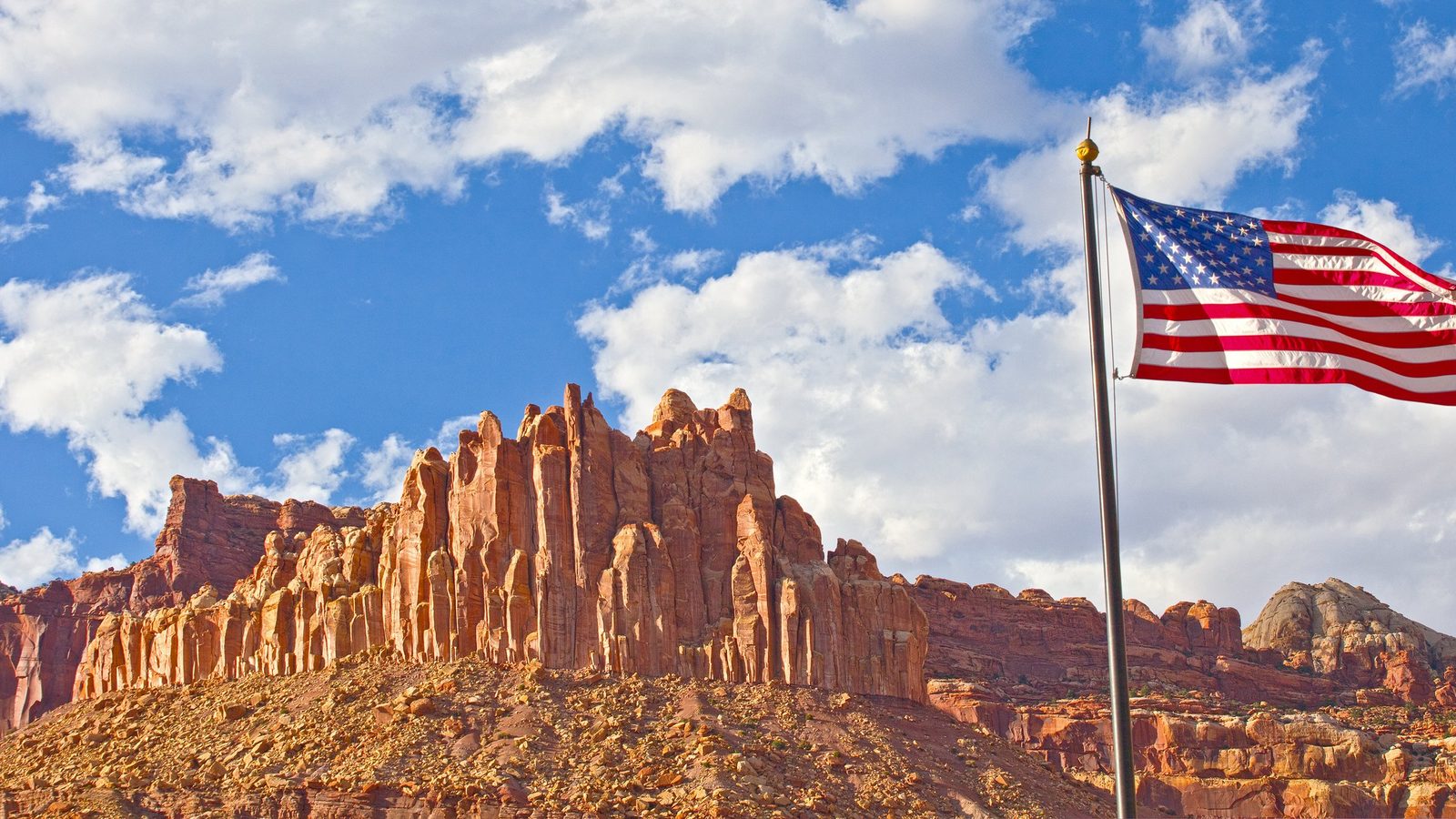
The Castle is identifiable as Capitol Reef in a way few other single formations are — the combination of turrets, spires, and the American flag at the visitor center in the foreground makes it the park's visual signature.
Maybe skip it if…
You're looking for a hike
The Castle is a formation you look at, not one you hike to. Hickman Bridge and the Chimney Rock Loop are the short-hike options near the visitor center area.
You've already been to Capitol Reef
If you've visited before, you know The Castle is there. Your time is better spent deeper in the park — on the Scenic Drive or in Grand Wash — on a return trip.
The experience
What you're looking at
A roadside formation that tells the whole geological story of Capitol Reef in one glance — and frames the park's history around it.
What you're looking at
The Castle is a cluster of cream and red sandstone spires and battlements that rise steeply above the valley floor near the park's visitor center. The name comes from the silhouette: from the road, the turrets and angular walls resemble the parapet of a medieval fortification. The rock is Wingate Sandstone — the same deep red formation that creates the vertical walls throughout Capitol Reef.
The Castle is part of the Waterpocket Fold, the primary geological feature of Capitol Reef National Park. The fold is a nearly 100-mile-long wrinkle in the earth's crust where layers of sedimentary rock were pushed up and tilted — in some places nearly vertical. The "reef" part of the park's name comes from the early pioneers who found the barrier impossible to cross with wagons, the same way a coral reef blocks ships. The Capitol Dome above the visitor center (the white Navajo Sandstone cap that gives the park its name) and The Castle below it are both part of this same exposed fold.
- Part of the Waterpocket Fold — a 100-mile monocline (one-sided rock fold)
- The multi-spired formation is visible from multiple points along UT-24
The visitor center area
The visitor center sits directly beneath the reef wall near The Castle. The American flag at the center — visible in many photos of the formation — is a deliberate composition element that travelers have framed with The Castle for decades. Inside the visitor center, exhibits explain the Waterpocket Fold geology and the Mormon pioneer history of the Fruita settlement that preceded the park. Worth 20 minutes before heading into the park.
The Fruita orchards are a short walk from the visitor center — hundreds of fruit trees planted by the early settlers, maintained by the NPS. When the fruit is in season (cherries in June, peaches in late summer, apples in fall), visitors can pick and eat on the spot for a fee per pound. The Castle looms above the orchard from the south — it's one of the more unusual scenic contexts in any national park.
Timing
When to visit
This is a roadside stop, so timing is about light and temperature more than crowds.
- Temps
- 50–75°F
- Crowds
- Building
- Shuttle
- Permit lottery
Wildflowers bloom in the orchards and along the reef base in April and May. The Castle looks dramatic against a blue sky with light snow still possible on the upper walls in March.
- Temps
- 85–100°F
- Crowds
- Moderate
- Shuttle
- Permit lottery
Capitol Reef sees fewer visitors than Zion or Arches in summer — but it's genuinely hot. The roadside views of The Castle are best in early morning before the heat builds. Cherry and peach harvests begin in June–July.
- Temps
- 50–80°F
- Crowds
- Lighter
- Shuttle
- Permit lottery
Apple harvest (September–October) brings visitors to the orchards, but the park overall is quieter than spring. The warm afternoon light on the red Wingate walls is exceptional in October.
- Temps
- 20–45°F
- Crowds
- Near empty
- Shuttle
- Permit lottery
Capitol Reef is significantly quieter than the other Mighty 5 parks in winter. Snow on The Castle's upper spires against a blue sky is a striking combination. The visitor center may have reduced hours — check NPS.gov.
Gear
What to bring
This is a pull-off stop — minimal gear required. Carry what you'll need for the rest of your park day.
Worth noting
Water
The roadside stop takes no effort, but if you continue into the park — the Scenic Drive, Hickman Bridge, Grand Wash — you'll need water. No services inside the park beyond the visitor center.
A wide-angle lens or phone
The Castle is a large formation. To fit it all in the frame from the UT-24 pullout, you need to step back — the wider your lens, the better the shot.
Backup plans
What else to see nearby
Once you've oriented at The Castle, here's how to spend the rest of your time in the entrance area and beyond.
Hickman Bridge
1.8 mi · 400 ft · Moderate · 1–1.5 hr
Why this one A natural bridge trail that starts just east of the visitor center on UT-24. The formation itself — a 133-foot-wide sandstone bridge — is the payoff, but the views back across the reef toward The Castle en route are also worth the trip.
The best short hike in the central park area. The trail gains elevation quickly but the terrain is solid and the views are broad.
Fruita Historic District walk
0.5 mi flat loop · 20 min · Easy
Why this one Walk through the old Fruita settlement — orchards, the historic schoolhouse, the Gifford Homestead — with The Castle visible above you to the south the entire time.
Flat, easy, shaded by the orchard trees. In-season fruit picking is a legitimate reason to extend your visit.
Save on Entry
One pass covers Capitol Reef — and every other US national park.
The America the Beautiful annual pass pays for itself in two or three park visits. Free entry, free passenger fees, and no more fumbling for a credit card at the kiosk.
 Buy your pass →
Learn more about the pass
Buy your pass →
Learn more about the pass
Ships from US Park Pass. Free shipping in the continental US.