
Can you do this?
The Grand Loop Drive — what it takes
Yellowstone has no shortcut across the middle — the park is built around the Grand Loop, a figure-eight road that ties the geyser basins on the west to the canyon and the lake on the east. The honest way to see it is to drive the loop over several days, base near one entrance, and give each half its own day rather than race the whole circuit between sights. It suits road-trippers and families who want the geysers, the canyon, and the wildlife valleys without backcountry travel and can absorb long drives — an hour between major stops is normal, before you have parked and walked a boardwalk. The altitude (most of the park sits above 7,000 feet) and the afternoon thunderstorms shape the day as much as the mileage.
- Distance 140 mi
- Time 3–5 days
- Permit Not required
- Season Late May – early October (interior roads close in winter)
No permit gates the drive — the constraints are distance and the seasons. The full figure-eight runs about 140 miles, the big stops sit an hour or more apart, and most of the interior road closes to cars from early November into spring. Book in-park lodging months ahead in summer; Old Faithful Inn and the canyon lodges fill first.
The route, in order
How the route runs
Each stop below is a real place on the park's map — walked in sequence, with how long you spend at each.
- Old Faithful Half day
The geyser the loop is built around
Start at Old Faithful and the Upper Geyser Basin — the densest concentration of geysers on Earth, and the one eruption you can time. Check the predicted window at the visitor center, then walk the boardwalk loop past Castle, Grand, and Morning Glory while you wait. It is the busiest stop on the loop, so come early.
- Grand Prismatic Overlook 1–2 hr
The hot spring, seen from above
Ten minutes north at Midway Geyser Basin, Grand Prismatic is the rainbow-ringed hot spring — and you only see the color from above. Take the short climb to the overlook off the Fairy Falls trailhead rather than the ground-level boardwalk; it is the difference between steam and the full spectrum.
- Norris Geyser Basin 1–2 hr
The figure-eight's crossroads
Norris is where the loop's two halves cross, and the hottest, most changeable basin in the park — Steamboat, the world's tallest active geyser, is here, though it erupts on no schedule. Walk the Porcelain Basin loop. From Norris you commit east to the canyon or north to Mammoth.
-
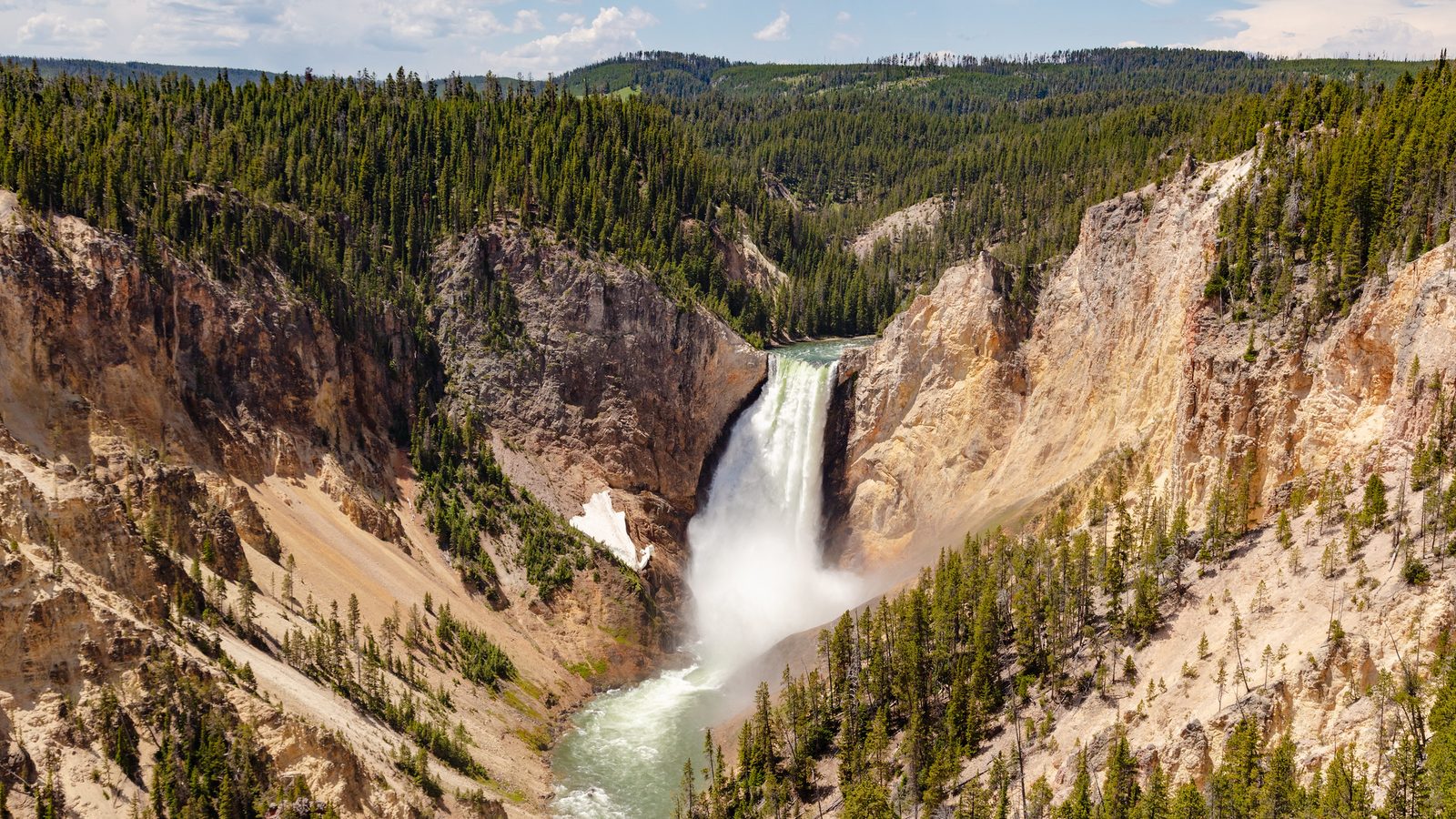
The canyon and the Lower Falls
East to the Grand Canyon of the Yellowstone, where the river drops 308 feet over the Lower Falls between yellow rock walls. Artist Point on the south rim is the head-on view of the falls; the north-rim overlooks come at it from the other side. Both rims have short walks to the railings.
- Mammoth Hot Springs Terraces 1–2 hr
The travertine terraces, north end
The north turn of the loop: Mammoth's terraces are tiered travertine, limestone laid down by the hot springs, and the chalk-white formations shift year to year as the water reroutes. This is also the only part of the park reachable by car all winter, and the north hub for gas, food, and rangers.
- Lake Butte Overlook 1 hr
Yellowstone Lake, closing the loop
Drop south to Yellowstone Lake — the largest high-altitude lake in North America — and the Lake Butte Overlook on the East Entrance road for the long view across the water to the Absaroka Range. It closes the lower loop and points you back toward the South Entrance and Grand Teton.
Plan B
If conditions turn
A multi-day route has more ways to go wrong than a dayhike. Here is what forecloses it — and your move when it does.
- Interior roads closed for winter
Most of the Grand Loop closes to cars from early November into spring; only the road from the North Entrance at Gardiner through Mammoth to Cooke City stays plowed. [VERIFY: NPS.gov current opening and closing dates.]
Instead: In winter, reach the geysers by snowcoach or guided snowmobile from West Yellowstone or Mammoth — or drive the open north road and spend the trip on Mammoth and the Lamar Valley wildlife instead, and save the figure-eight for summer.
- A loop segment closed for construction or weather
Yellowstone rebuilds sections of the loop most summers, and snow can close a high stretch into June; a closure can add an hour of backtracking.
Instead: Check the park's road-status page the morning you drive, and run the open half of the figure-eight first — either loop stands on its own as a full day, so reorder rather than wait it out.
Make it happen
Reserve your spot
The route is decided. The only thing between you and the trail is the permit — settle it now, while it's fresh.
Save on Entry
One pass covers Yellowstone — and every other US national park.
The America the Beautiful annual pass pays for itself in two or three park visits. Free entry, free passenger fees, and no more fumbling for a credit card at the kiosk.
 Buy your pass →
Learn more about the pass
Buy your pass →
Learn more about the pass
Ships from US Park Pass. Free shipping in the continental US.