
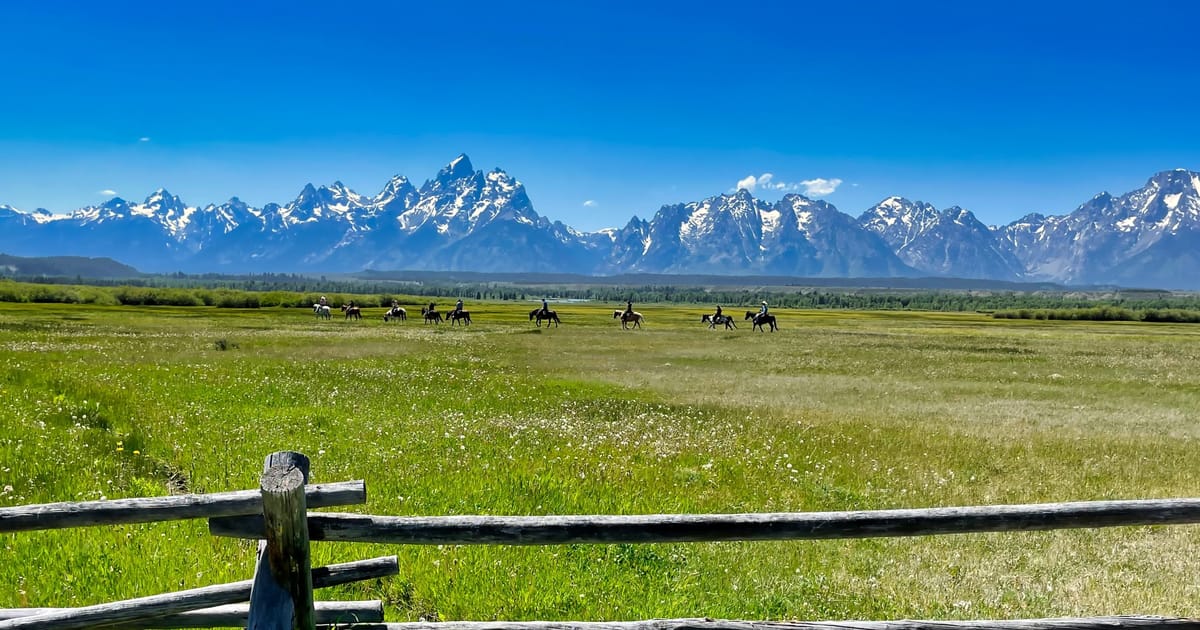
Can you do this?
The Teton Crest Trail — what it takes
The route holds the high western shelf below the peaks, crossing Hurricane Pass with the Grand framed ahead and threading the basins north before it drops to Jenny Lake. It suits experienced backpackers fit for sustained miles above 9,000 to 10,000 feet with a full pack, comfortable with early-season snow travel and self-sufficient camping. It is not a beginner's first traverse.
- Distance 40 mi
- Time 3–5 days
- Permit Backcountry permit required
- Season Mid-July – Sept (snow-dependent)
A backcountry permit is required for every night, and the high camping zones are competitive — a share is reservable ahead via recreation.gov, the rest walk-up. Snow is the other gate: the high passes hold snow and ice into mid-July most years, sometimes needing an ice axe. And it's a point-to-point, so you sort the car shuttle — the Jenny Lake boat saves miles at the exit.
The route, in order
How the route runs
Each stop below is a real place on the park's map — walked in sequence, with how long you spend at each.
- Death Canyon Trail Day 1
The way up
A common southern start — climb Death Canyon to gain the crest. Granite Canyon and the Teton Village tram are the other ways onto the high route.
- Teton Crest Trail Days 2–3
The high traverse
The spine of the trip: the trail holds the high western shelf below the peaks, over Hurricane Pass with the Grand dead ahead, past Alaska Basin and Sunset Lake. This is the country you came for.
- Lake Solitude Trail Day 3–4
Over the divide
Drop toward Lake Solitude below Paintbrush Divide — an alpine lake under the north faces, the last high stretch before the long descent.
- Cascade Canyon Trail Day 4–5
The exit
Down Cascade Canyon to Jenny Lake. Catch the Jenny Lake boat shuttle across to cut the last flat miles, or walk the lakeshore to the trailhead.
Before you can go
Permit & logistics
Every night on the Teton Crest Trail needs a backcountry permit (camping-zone reservations via recreation.gov, plus walk-up). [VERIFY: current reservation window, the early-season snow and ice-axe advisory on the high passes, and fees against NPS Grand Teton before publishing.]
Plan B
If conditions turn
A multi-day route has more ways to go wrong than a dayhike. Here is what forecloses it — and your move when it does.
- Snow on the high passes
Hurricane Pass and Paintbrush Divide hold steep snow into mid-July; an early-season crossing can need an ice axe and the skill to use it.
Instead: Go late July through September when the passes melt out, or carry and know how to use an ice axe.
- Afternoon thunderstorms
The exposed high traverse is no place to be in a storm; lightning builds over the crest most summer afternoons.
Instead: Cross the passes in the morning and be off the high ground by early afternoon.
Make it happen
Reserve your spot
The route is decided. The only thing between you and the trail is the permit — settle it now, while it's fresh.
Save on Entry
One pass covers Grand Teton — and every other US national park.
The America the Beautiful annual pass pays for itself in two or three park visits. Free entry, free passenger fees, and no more fumbling for a credit card at the kiosk.
 Buy your pass →
Learn more about the pass
Buy your pass →
Learn more about the pass
Ships from US Park Pass. Free shipping in the continental US.