Spring — sweet spot before the heat
Moderate crowds Mar–May
The window every regular plans around. Daytime highs run from the 60s in March into the 80s by late May, the wash and slot-canyon hikes are at their best before the monsoon arrives, and apricot, peach, pear, and apple blossoms run through April in the Fruita orchards. Cathedral Valley and the Burr Trail dry out from spring rains into a workable surface for high-clearance vehicles by April most years — call the road hotline before you head out. Reserve the Fruita Campground months ahead.
What's open: Park open year-round; Scenic Drive open daily; Cathedral Valley and Burr Trail require high-clearance four-wheel-drive and can be impassable after spring rain (road hotline 435-425-3791 ext 4); orchard blossoms run March through early May.
Reserve a Fruita campsite →
Summer — apricots, monsoons, hot canyons
Peak crowds Jun–Aug
Summer is the orchard season and the hard hiking season at once. Apricots ripen from late June into mid-July, peaches start in late July, and the U-Pick orchards are the reason a lot of repeat visitors come this week. Daytime highs climb into the upper 80s and low 90s and the July–September monsoon brings hard, fast thunderstorms with flash floods through Grand Wash, Capitol Gorge, and the Sulphur Creek narrows — never enter a slot canyon when storms are forecast over the high country to the west.
What's open: Park, Scenic Drive, and orchards open; Fruita U-Pick orchards open 9 a.m. to 5 p.m. (fenced) or dawn to dusk (unfenced) when picking is active; apricots ripen late June to mid-July, peaches late July through early September; monsoon flash-flood watches through July–September.
Plan a Fruita orchard pick →
Fall — apples in the orchards, cool nights
Moderate crowds Sep–Oct
The other sweet spot. Pears wrap up in early September, apples carry through mid-October, and the cottonwoods along the Fremont River turn gold in late October. Crowds drop after Labor Day and the monsoon tapers. Daytime highs slide from the low 80s into the 60s, nights stretch into the 30s, and Cathedral Valley and the Burr Trail are at their most reliable surface — the time of year repeat visitors save for the back-country loop.
What's open: Park, Scenic Drive, and orchards open; Fruita pears ripen early-to-mid August through early September, apples mid-August through mid-October; Cathedral Valley and Burr Trail typically at their driest of the year (check the hotline).
Book a Torrey stay for fall →
Winter — quiet road, cold nights
Light crowds Jan–Feb · Nov–Dec
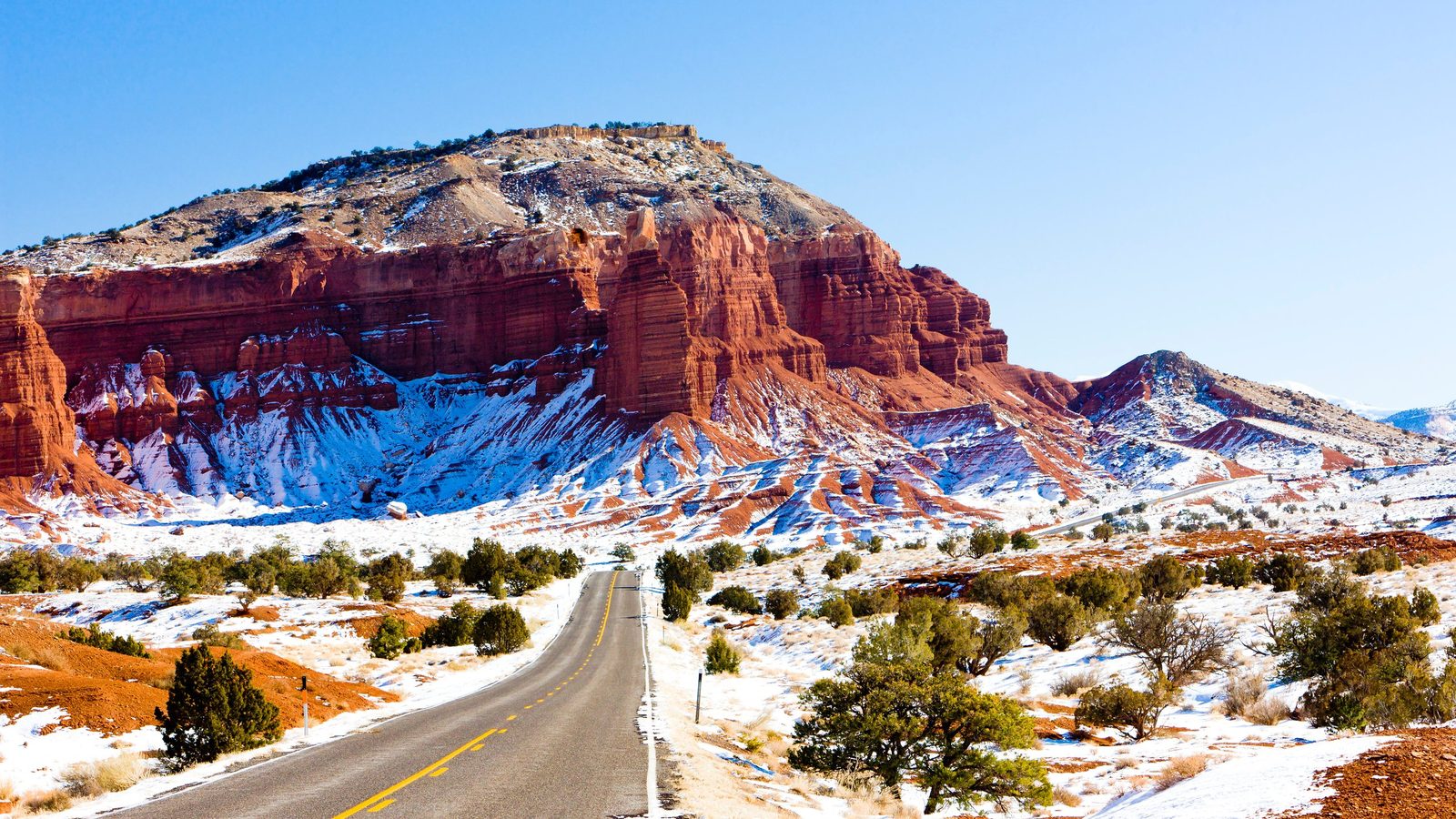
Capitol Reef in winter is one of the quietest stretches of any Utah park. Daytime highs sit in the 40s and 50s, nights drop into the 20s, and snow dusts the Waterpocket Fold for a few days at a stretch before melting off the sun-facing slopes. The Scenic Drive stays open; Cathedral Valley becomes effectively closed (mud and ice on the descents make the route impassable). Plan it as a season for the Scenic Drive, short hikes, and night skies — Capitol Reef is one of the darker NPS units in the lower 48.
What's open: Park and Scenic Drive open; orchards closed for the season; Cathedral Valley and Burr Trail effectively impassable after snow or rain; visitor-center hours reduced.
Check winter road and trail conditions →