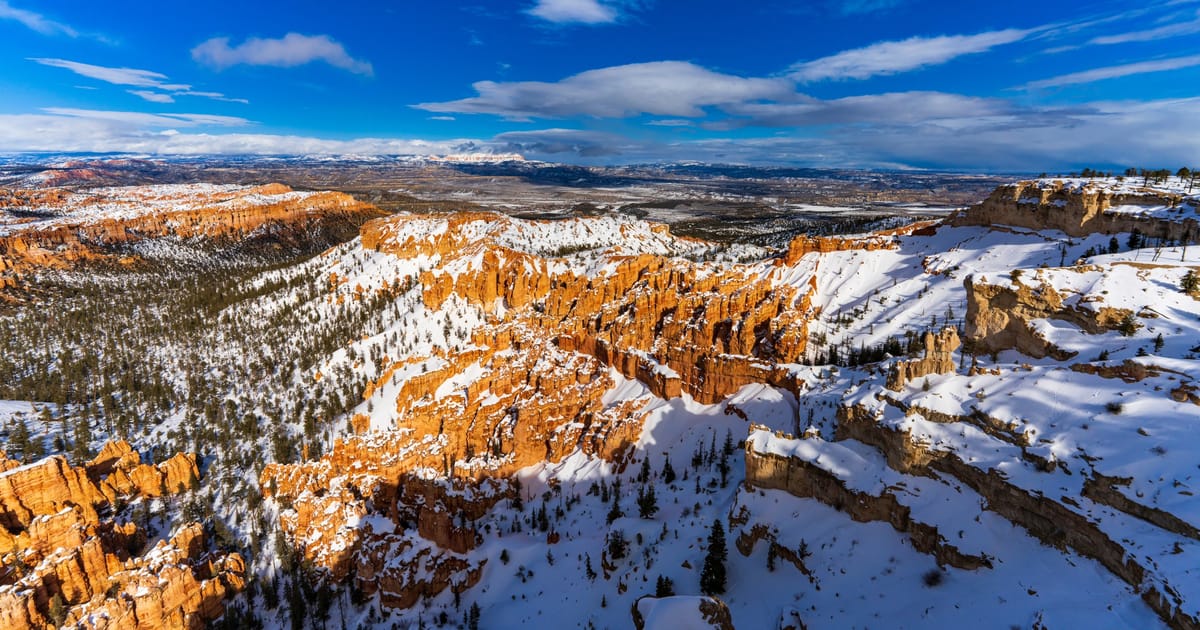
Late spring — the shuttle starts, snow on the hoodoos
Light crowds Apr–May
The shuttle opens for the season on April 3 in 2026 and the rim warms into the 50s and 60s by May, but Bryce sits above 8,000 feet — late snowstorms in April are common and a fresh inch on the hoodoos at sunrise is one of the park's signature looks. Lower-elevation trails along the rim open first; routes into the amphitheater (Queen's Garden, Navajo Loop) can stay icy into May. Reserve a Bryce Canyon City room early if you're aiming for the festival in June.
What's open: Park open year-round; Bryce Canyon shuttle runs April 3 to October 18 in 2026 (optional, free with admission); below-freezing nights are common through May; trails inside the amphitheater can hold ice and packed snow.
Check rim and amphitheater trail conditions →
Summer — dark skies and the Astronomy Festival
Peak crowds Jun–Aug
The cool-summer trip: rim highs sit in the 60s, 70s, and low 80s, every viewpoint and ranger program is running, and Bryce is one of the darkest International Dark Sky Parks on the Colorado Plateau. The annual Astronomy Festival (June, new-moon weekend) concentrates the ranger telescope program and astronomy talks into three evenings at the visitor center. Afternoons in July and August bring fast-moving thunderstorms with lightning on the rim — get off exposed viewpoints when storms build. Reserve North Campground or a Bryce Canyon City room well ahead.
What's open: Shuttle running 8 a.m. to 8 p.m. May 9 to September 20; all viewpoints and ranger programs open; the 2026 Astronomy Festival ran June 11–13 — check nps.gov/brca/planyourvisit/astrofest.htm for the 2027 date; afternoon thunderstorms and lightning typical July–August.
Plan an Astronomy Festival visit →
Fall — clear nights, thinning crowds
Moderate crowds Sep–Oct
The window many regulars protect. Crowds drop sharply after Labor Day, the late-summer thunderstorms taper, and the skies stay among the clearest of the year — the same factors that make Bryce a destination for stargazing year-round. Daytime highs slip from the low 70s in early September into the 50s by mid-October; October snowstorms are not unusual, so pack for both. The shuttle wraps for the season on October 18 in 2026.
What's open: Park open; shuttle on 8 a.m. to 6 p.m. schedule September 21 to October 18, then off for the season; below-freezing nights begin in October; October snowstorms are possible.
Book a Bryce Canyon stay for fall →
Winter — snowshoes on the rim
Light crowds Jan–Mar · Nov–Dec
The hoodoos under snow are the most photogenic version of Bryce, and the rim is nearly empty. Daytime highs sit in the 30s and 40s with hard cold at night — below-freezing every night through the winter, and record lows have reached -26°F. The rim road stays plowed; trails into the amphitheater (Queen's Garden, Navajo Loop) need traction devices when they're open at all. Plan it as a snowshoe and cross-country-ski trip, not a big-mileage descent.
What's open: Park and main rim road open year-round (UDOT plows after storms); the southern part of the rim road may close after heavy snow; shuttle not running; amphitheater trails frequently icy or snow-packed; visitor-center hours reduced.
Check winter road and trail conditions →